
English| EUR
Suggested for you
More currencies
Choose a language
Vila Franca Islet sits 500 meters offshore from Vila Franca do Campo, a flooded volcanic crater that forms one of the Atlantic's most concentrated marine reserves. Daily visitor numbers are capped, boat transfers operate on a fixed schedule, and the access window is shorter than most coastal sites in the Azores.
Quick answer
Diving Sao Miguel Azores at Vila Franca Islet operates daily from 10:00 to 18:00, with a €15 per-adult access fee covering entry to the nature reserve. The islet enforces a strict daily visitor cap of 400 people, and boat transfers from the mainland dock depart approximately every 30 minutes during opening hours, weather permitting. Arrive between 10:00 and 12:00 to secure availability before mid-day capacity is reached.
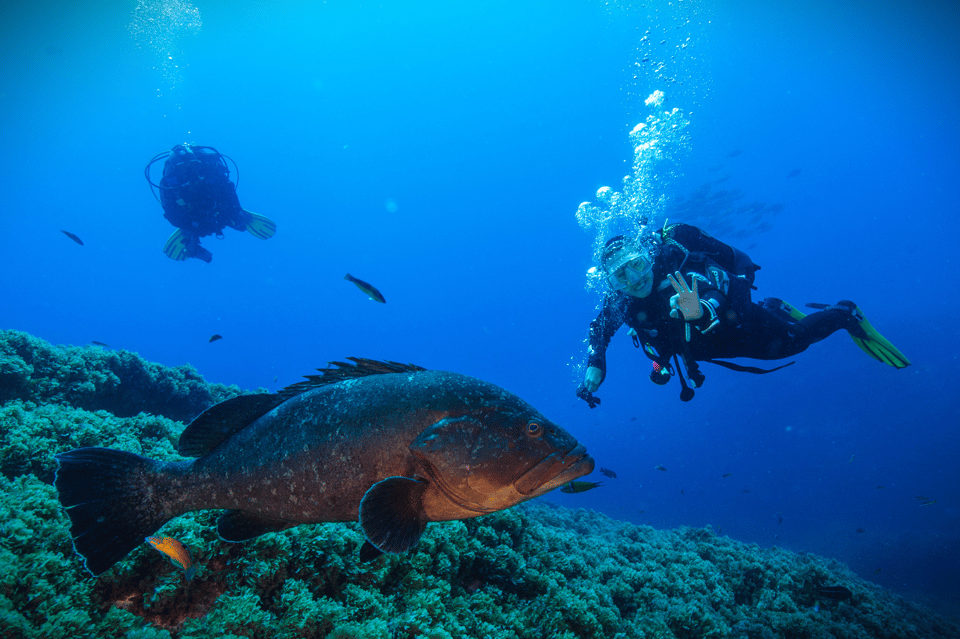
The crater walls drop 20 meters below the waterline, creating a sheltered basin where Atlantic species congregate in densities rarely seen along São Miguel's exposed coastline. Dusky groupers, parrotfish, and schools of salema patrol the volcanic rock formations, while octopus and moray eels occupy the fissures that fracture the inner rim. The water column inside the crater averages 8 to 12 meters of visibility during summer months, dropping to 5 meters when autumn swells stir sediment from the seabed. Diving Sao Miguel Azores requires coordination with the islet's access restrictions. The nature reserve designation limits daily entry to 400 visitors across all activities, and that figure includes snorkelers, swimmers, and shore visitors in addition to divers. Boat operators from Vila Franca do Campo harbor hold the exclusive transfer concession, and crossings depend on sea state—easterly winds above 15 knots typically suspend service. No dive operators are permanently stationed on the islet itself; visiting groups arrive with their own equipment and guides, conduct the dive, and return on a scheduled departure. The crater's semi-enclosed geography creates micro-conditions that differ from the open-coast sites along São Miguel's southern shore. Water temperature inside the basin runs 1 to 2 degrees warmer than ambient Atlantic readings, and the rock walls buffer surge except during storm events. The seabed composition alternates between volcanic boulders and patches of coarse sand, with minimal reef structure. Most dives follow the interior perimeter at depths between 6 and 15 meters, where the highest biomass concentrates. Entry and exit occur from a narrow cobblestone beach on the crater's eastern edge, the only landing point approved for visitor use. Seafaring tradition in Vila Franca do Campo stretches back to the 16th century, when the settlement served as São Miguel's first administrative seat. The islet functioned as a quarantine station during plague outbreaks and later as a lookout post for approaching vessels. Marine protection measures were formalized in 1983, and diving sao miguel azores gained structure as operators recognized the crater's value as a sheltered training and observation site. The reserve boundaries extend 200 meters seaward from the islet's perimeter, prohibiting anchoring, fishing, and unguided watercraft within that radius.
“The crater walls drop 20 meters below the waterline, creating a sheltered basin where Atlantic species congregate in densities rarely seen along São Miguel's exposed coastline.”
The optimal window for visiting the Vila Franca Islet is between 10:00 and 12:00. Arriving early is necessary to secure entry due to strict daily visitor caps.
Warm air 24°C, water 22°C
Expect peak crowds and frequent capacity limits. Early arrival is essential for access.
Mild air 20°C, water 20°C
Lower attendance allows for a more controlled experience. Weather remains stable for water activities.
—
Mid-week arrivals provide the best opportunity to navigate visitor caps and secure your spot. Avoid weekend congestion by planning for Tuesday through Thursday.
Verdict: The best time to visit is on a weekday between 10:00 and 12:00 during the shoulder months of May or September.
The islet is open daily for public access throughout the operating season. Daily hours remain consistent across all days of the week.
The islet is accessible only during the summer season when weather conditions permit, with operations typically concluding in September.
The Vila Franca Islet is located off the southern coast of São Miguel, accessible exclusively by boat from the harbor in Vila Franca do Campo. Visitors must secure maritime transport to reach the volcanic crater.
EN1-1A to Vila Franca do Campo harbor
Line 315 from Ponta Delgada to Vila Franca do Campo
Shuttle from Vila Franca do Campo harbor to the islet
Boat transfers operate from the main marina in Vila Franca do Campo; verify your booking status online before departing to ensure you have a confirmed passage to the islet.
Prepare documentation, gear, and ecological awareness before departing for the marine reserve.
Everything you need to know about diving sao miguel azores
While the islet is a protected nature reserve primarily used for swimming and snorkeling, actual scuba diving is strictly regulated or prohibited within the crater to preserve the ecosystem. Visitors interested in diving São Miguel Azores should look for authorized offshore operators for open-water activities. The interior of the islet remains a protected area meant for surface-level observation. Equipment is not provided at the site, and visitors must bring their own snorkeling gear if they wish to observe the marine life found within the crater. Please note that diving São Miguel Azores requires specific permits and local guidance outside of this nature reserve. Daily visitor numbers are capped to protect the islet, which can make access competitive. We recommend planning your diving São Miguel Azores itinerary well in advance to accommodate these restrictions and ensure you have confirmed access. Yes, there is an entrance fee of 15 EUR for non-resident adults. This access fee applies to those visiting the nature reserve, while boat transfers to the islet are typically charged separately by local carriers. The islet offers a calm, contained environment, but it is not a traditional scuba diving location. Those looking for an Azores underwater tour should focus on snorkeling or surface swimming within the crater, as the site is better suited for casual observation than technical diving. To optimize your experience, arrive between 10:00 and 12:00 to avoid mid-day crowds and manage your time effectively. This window helps you secure access before daily visitor limits are reached, ensuring your trip proceeds as planned. Yes, families are welcome to visit the site, though children should always be supervised near the water. The calm, shallow waters of the crater provide a safe environment for younger visitors to observe the aquatic biodiversity of the Atlantic.