
English| EUR
Suggested for you
More currencies
Choose a language
Vila Franca Islet, a submerged volcanic crater off São Miguel's southern coast, is the Azores' most celebrated snorkeling destination. This guide covers ferry schedules, visitor limits, marine life, and the logistics that turn a research question into a planned visit.
Quick answer
Yes, you can snorkel in the Azores, and Vila Franca Islet is the premier site. Daily visitor numbers are capped to protect the marine reserve, so early arrival secures passage.
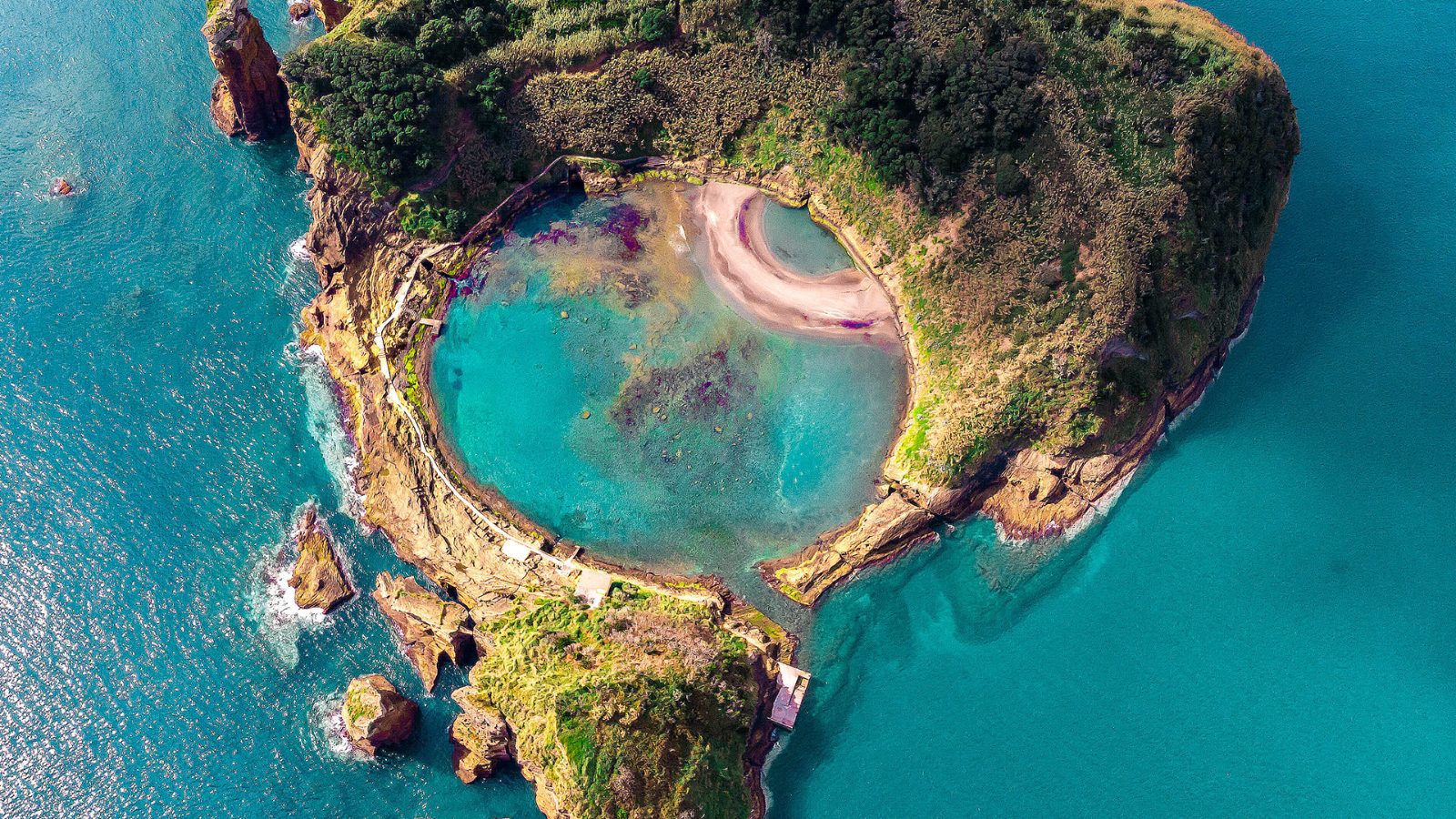
Vila Franca Islet rises from the Atlantic as a near-perfect ring of basalt, the remnant cone of a Pleistocene volcano whose seaward wall collapsed and flooded. The sheltered lagoon inside holds water clearer than the open coast, a natural aquarium where parrotfish graze over lava boulders and schools of sargo circle in synchronized arcs. Snorkeling Azores waters means cold-water immersion—summer surface temperatures hover between 19 and 22 degrees Celsius, tolerable in a wetsuit but bracing without one. The islet's protected status as a nature reserve limits daily access to a fixed number of visitors, enforced through timed ferry departures from the mainland marina. Ticket sales open weeks in advance online, and weekend slots in July and August fill within days. Walk-up availability exists on weekday mornings in June and early September, but capacity control is absolute. The crater's biodiversity reflects the Azores' position as a mid-Atlantic stepping stone. Species common to the Mediterranean—ornate wrasse, salema—share the lagoon with subtropical wanderers riding warm currents north. Visibility often exceeds fifteen meters, the volcanic sand reflecting enough light to render the water a pale turquoise when viewed from the rim trail. Rocky outcrops along the inner wall harbor octopus and moray eels; the shallows near the entry point host juvenile fish in dense aggregations. Timing shapes the experience as much as location. Morning crossings put snorkelers in the water before the sun climbs high enough to drive glare off the surface. The ferry schedule aligns with tidal slack, minimizing current through the breach in the crater wall where boats enter and swimmers follow. Weather closures are rare but final—if the Atlantic swell exceeds safe limits, the entire operation halts and tickets roll to another day. No infrastructure exists on the islet itself: no shade, no facilities, no gear rental. Everything required for a day in the water travels with the visitor or stays behind.
“The sheltered lagoon inside holds water clearer than the open coast, a natural aquarium where parrotfish graze over lava boulders.”
The best window for snorkeling at Vila Franca Islet is during the mid-morning, specifically between 10:00 and 12:00. Arriving within this window is necessary due to the strict daily visitor capacity limits enforced at the islet.
Water 22°C-23°C; air 25°C. Sunny, calm conditions prevail.
Expect significant crowds; secure your passage well in advance.
Water 21°C-22°C; air 22°C. Conditions remain suitable for snorkeling.
Visitor numbers decrease, providing more space within the crater lagoon.
—
Arriving at the opening time avoids midday queues and ensures entry before daily limits are reached.
Verdict: The best time to visit is during the shoulder months of September or October, arriving on a weekday at 10:00 to secure your spot.
Ensure a smooth visit by securing your ferry ticket online and packing the essentials for a full day on the islet.
Everything you need to know about can you snorkel in the azores